

Start With The Money That Lands Every Month
Begin with regular income only: salary, wages, pension, support payments, or any other amount that lands on a predictable cycle. If income changes from month to month, use a careful average based on the last few months rather than the best month. That gives a fairer picture of what is actually available for rent, food and debt instalments.
Write the figure down as a net amount after deductions. If you are paid weekly, convert it to a monthly total so the comparison stays consistent. Many households in Johannesburg, Pretoria and Cape Town feel the pressure when income looks healthy on paper, but the take-home amount is lower once deductions are counted.
- Use take-home income, not gross pay
- Separate guaranteed money from irregular extras
- Average variable income over a sensible period
- Keep a note of any deductions that run every month
Separate Fixed Costs From The Costs That Move Around
Fixed costs are the amounts that tend to stay the same each month. Examples include rent or bond payments, school fees, insurance, minimum debt instalments and transport contracts. Variable costs shift with use or season, such as groceries, fuel, electricity, water, airtime and medical spending. In Durban, for instance, higher humidity can affect some household goods and storage, while coastal living often changes monthly spend in small but steady ways.
Listing the two groups separately makes it easier to see which costs are non-negotiable and which can be trimmed. It also shows whether a shortfall is caused by one large item or by many small expenses adding up. That matters when you are trying to work out if the month is tight or if the budget is overextended.
- Fixed costs: rent, bond, insurance, school fees, minimum debt payments
- Variable costs: groceries, fuel, electricity, water, airtime, medical items
- Seasonal costs: school uniforms, service costs, festive spending, vehicle repairs
- Irregular costs: once-off fees, tolls, account charges and small emergencies
Read The Gap Between Income And Outgoings
Once the numbers are in place, compare total income with total expenses. If income is higher, the difference shows what remains for savings, emergencies, or extra debt reduction. If expenses are higher, the gap needs attention because it usually points to borrowing, missed payments, or using credit to cover ordinary living costs.
This is where a simple monthly cash flow check helps. If the budget only works when nothing goes wrong, then the household is already carrying risk. A single tyre replacement, school requirement or medical bill can throw the month off balance. In that situation, debt review basics, consumer rights under the National Credit Act, and the role of a registered debt counsellor may need to be understood more closely.
- Positive gap: income covers costs and leaves a small buffer
- Thin gap: little or nothing remains after essentials
- Negative gap: expenses run above income
- Stress signs: late payments, maxed out credit, or borrowing for basics
Build A Working Monthly Comparison Sheet
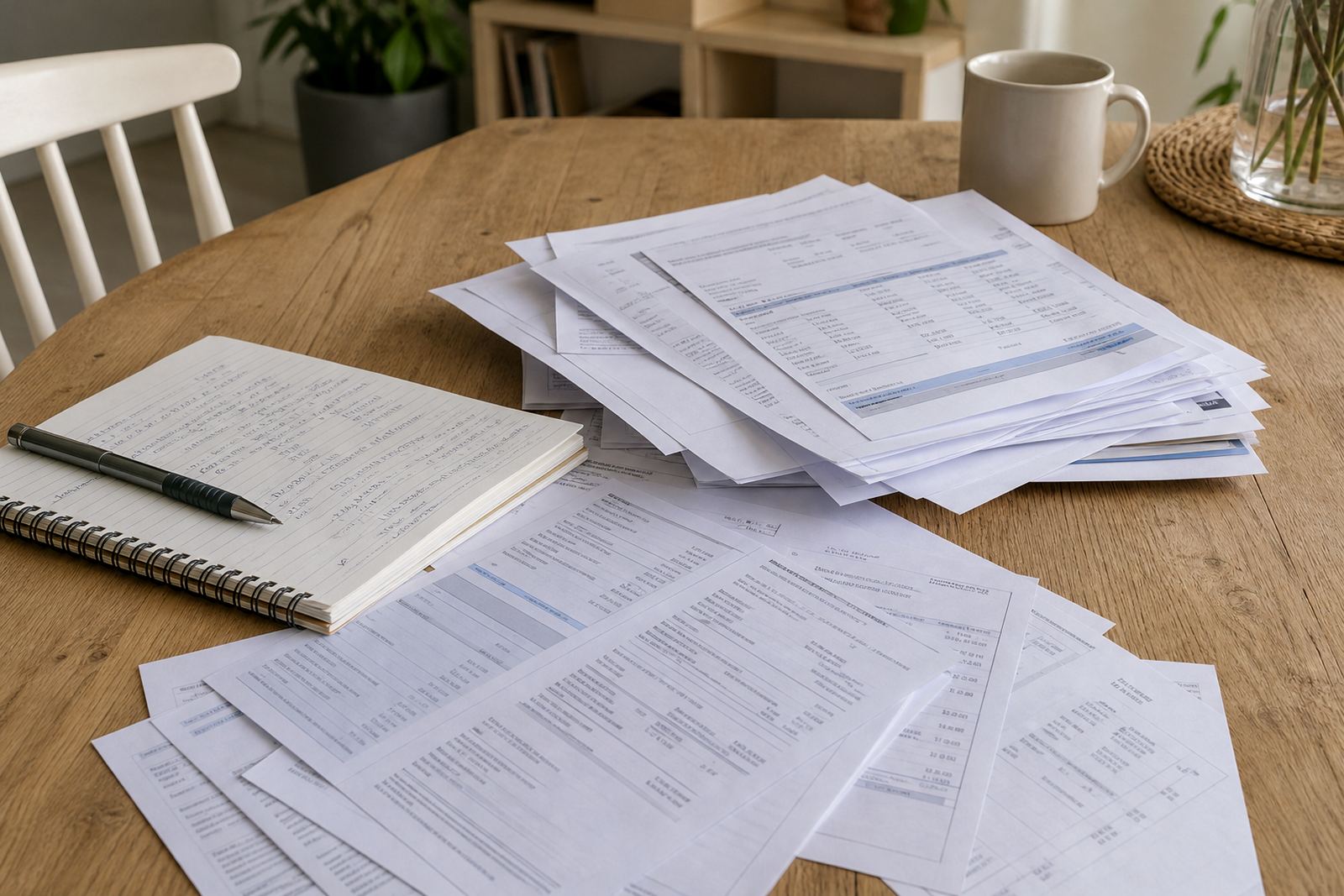
A proper comparison sheet does not need to be fancy. A page, spreadsheet or notebook can do the job if every item is written in one place. Put income in one column and costs in another, then add a third column for the difference between planned and actual spending. This helps you see whether the numbers match real life or only look neat in theory.
For people in Sandton, Midrand, Rosebank and other busy centres, daily spending can slip through the cracks because card swipes and small online purchases feel minor at the time. Writing them down shows the true total. Over a month, those little amounts can sit next to rent or debt payments and change the whole picture.
- List each income source separately
- Record every fixed cost and variable cost
- Mark items already paid and items still due
- Compare planned amounts with actual amounts at month end
Use The Comparison To Test Debt Pressure
When expenses sit too close to income, debt pressure often starts showing in the budget before it shows on a credit report. Missed instalments, repeated shortfalls and accounts that only get paid with fresh borrowing are common warning signs. A credit report may also show accounts, payment history and judgments that help explain why the budget feels stretched, though only the registered data shown by credit providers can be relied on.
The National Credit Act sets rules around responsible credit and consumer treatment, but it is not a substitute for individual legal advice. If debt review is being considered, confirm the process with a registered debt counsellor or the National Credit Regulator. They can explain whether the situation may fit the formal process and what documents are normally needed.
OpenCredit offers general guidance for understanding those steps, but the final decision should rest on verified advice from the correct authority. That keeps the process grounded in the law and in the actual numbers on hand.
Practical Checks Before You Tidy The Budget
Before adjusting anything, check whether the budget reflects real household life. A budget that ignores transport, school costs or medical items will usually fail under pressure. It also helps to separate personal spending from household spending so the true source of strain is visible.
If there is room to improve, start with the most predictable items first. Reducing waste in groceries, cutting duplicate subscriptions, and planning for irregular costs can help create breathing space. If the numbers still do not balance, that is useful information too. It may point to a deeper affordability problem rather than a spending habit alone.
- Does the budget include every regular bill?
- Are the minimum debt payments realistic?
- Is there any room for an emergency buffer?
- Are irregular costs being set aside for before they hit?
Keep The Habit Going From Month To Month
The value of comparing income and expenses comes from repetition. One month can be unusual, but several months together show the pattern. That makes it easier to spot when costs are drifting upward, when income has changed, or when debt commitments are squeezing the household too hard.
A steady review also supports better conversations about credit scores, debt review and budgeting. It gives you a clearer base for speaking with a registered debt counsellor or checking guidance through the National Credit Regulator. For people in Johannesburg, Pretoria, Durban, Cape Town and Gqeberha, the numbers are still local and personal, even when the rules are national.
OpenCredit focuses on helping South Africans make sense of those numbers without turning the process into guesswork. The comparison between income and expenses is often the first honest picture of financial pressure, and it is usually the place where useful decisions begin.