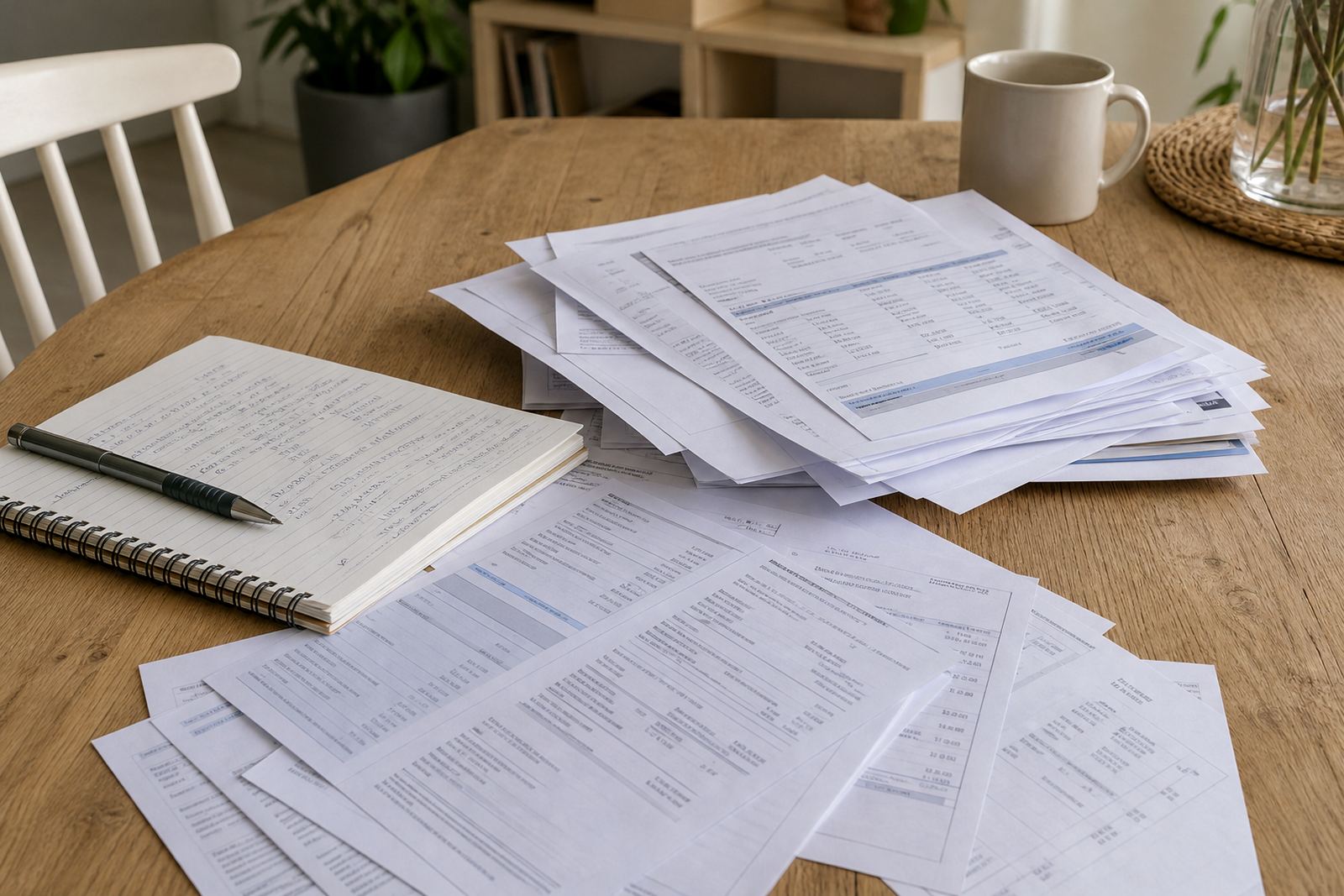
Start with the right papers in one place
Before you raise a dispute, gather the records that show what was listed, when it was listed and why you think it needs a closer look. A credit report is only as useful as the documents behind it, so the safer approach is to keep everything in one file or folder. That file should include the report itself, the account records you have, and any letters or messages linked to the entry.
In South Africa, credit reports are used by lenders to review payment behaviour, account status and other credit information. If a listing looks wrong, the dispute usually starts with clear proof. That could be a settlement letter, a paid-up note, an account statement, or a record showing that an account was closed or handed over incorrectly.
- Your current credit report or the page showing the entry
- South African ID copy and contact details
- Account numbers, reference numbers and dates
- Statements, settlement letters, payment confirmations or messages
Read the entry line by line before you question it
Do not rely on the heading of the listing alone. Read the creditor name, account number, dates, balances, status codes and any remarks attached to the account. Small differences matter. A balance can be correct while the status is wrong, or the account can belong to a similar name and not be yours at all.
It helps to make a short note next to each point you want checked. Keep the note factual. Write what the report says, what your own record says, and the date on which the difference appears. That gives a registered debt counsellor, credit provider or studio query handler a clearer picture of the issue.
- Check spelling of names and ID-linked details
- Compare balances, instalments and account status
- Look at listing dates and last payment dates
- Mark anything that no longer matches your records
Keep your question tight and factual
A dispute is stronger when the question is narrow. Instead of listing everything that feels wrong, separate each issue into its own point. For example, one point may be a payment that was not reflected, another may be a debt-review marker that remains on the report after a matter has ended, and another may be an account that belongs to someone else.
The National Credit Act gives consumers rights around fair treatment and correct information, but the process still depends on evidence. If you are unsure whether a listing is a credit studio matter, a creditor matter, or something that needs debt-review guidance, confirm the route with a registered debt counsellor or the National Credit Regulator. That avoids sending the same documents to the wrong place more than once.
- State the exact listing you are disputing
- Explain the difference between the report and your records
- Attach the supporting page or statement for each point
- Ask for the item to be checked, corrected or explained
Know how debt review entries fit into the picture
Debt review is a formal process under the National Credit Act for consumers who may be over-indebted. It can affect how accounts appear on a credit report, and some entries may only change once the proper process has been followed. A general dispute should not be used to skip legal steps that belong to debt review or to reverse an outcome that still needs formal handling.
If a report shows debt-review related information, keep the counsellor file, court order or clearance certificate related to the matter, if you have those records. If you do not, note that clearly in your file and ask a registered debt counsellor or the National Credit Regulator what proof is usually needed for that type of query. That keeps the process neat and lowers the chance of confusion later.
Budget notes also matter here. A clear monthly budget can show whether an account problem came from missed payments, duplicated debits or an old instalment that was never closed properly. For many consumers, the value is in the paper trail more than in memory.
Build a neat document pack before you submit anything
Once you have the papers, arrange them in a simple order. Put the report first, then the proof documents, then a short list of questions. If there are several issues, separate them with headings or numbered notes. A tidy pack makes it easier to follow the timeline and can prevent the same document being sent in three different forms.
Keep copies of everything. If you scan or photograph pages, make sure the dates and amounts can still be read. Faded statements, cut-off corners and blurry screenshots slow the review because nobody can confirm what the record actually says. A clean copy saves trouble later, especially where older accounts or closed debts are involved.
- Page 1: credit report sections with the disputed items marked
- Page 2: statements, letters or payment records
- Page 3: your short written questions
- Page 4: any debt review or clearance documents
Questions that help the review move cleanly
Good questions are specific enough to answer without guesswork. Ask what the listing refers to, what source information was used, and what supporting record is needed to update it. If a matter involves debt review, ask whether the item relates to the debt counsellor record, the credit provider record or the credit studio file. That one distinction often saves a lot of back and forth.
If you are not sure what the next step should be, do not rely on assumptions from family or friends. Credit reports, debt review and account corrections all follow formal rules. A registered debt counsellor can explain whether the issue is a credit dispute, a debt-review matter or an account-level correction. The National Credit Regulator is also the place to verify the general process and rights under the National Credit Act.
A short final check before you raise the query
Before you submit the file, read it once more from the top. Confirm that the names match, the dates make sense and the account numbers line up. Make sure each disputed item has at least one supporting record next to it. If a document is missing, say so plainly rather than guessing at what may be on record.
That last check matters for anyone in Johannesburg, Pretoria, Durban, Cape Town or Gqeberha who is working through a general credit report issue online. A clear file does not solve the matter on its own, but it gives the query a proper starting point and helps the next person understand exactly what needs to be reviewed.